
Rosie Shackleton, she/her – I am a Bradfordian living and working in Scotland and have recently graduated with a MA joint honours in German and history from the University of Edinburgh. During my degree I specialised in memory history, especially the work of Robert Tischler, and the memorialisation of the Holocaust in Europe. I am currently working within the Edinburgh arts sector and gearing up to do a Masters at some point in the near future.
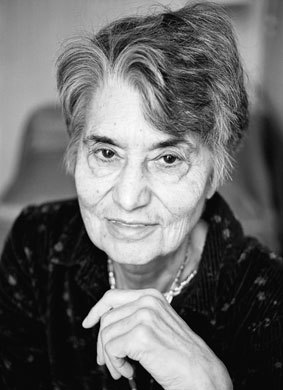
In her Holocaust testimony weiter leben: Eine Jugend (1992) Ruth Klüger presents language, especially poetry, as an alternative form of memorialisation. She rejects official, and solely physical forms of mourning and monument respectively, showing not only their limitations, but offering linguistic solutions. Poetry is subsequently shown to be a more dynamic form of memorialisation which allows direct engagement with her own experiences of the Holocaust. Klüger’s understanding of memory is therefore centred decidedly around language rather than physical space. Her poetry and control of language, poignantly in German, present an alternative to the established “Erinnerungskultur” surrounding the Holocaust, awarding Klüger a power over her own memory and how she remembers the dead. The following essay will explore Klüger’s linguistic memorials within the narrative of weiter leben; a book whose multiple poetic markers promote active engagement with the past and reject the limitations of official channels of memory; be that the memorialisation of the Holocaust or mourning more widely within Judaism.
“I do not come from Auschwitz“
Throughout her testimony, Klüger expresses her frustration at being continually tethered to the physical sites of her Holocaust experience, especially Auschwitz. Her exclamation “I do not come from Auschwitz” asserts her rejection of the camp as being inherently part of her being as a survivor. The permanence and fixed position of “KZ-Gedenkstätten”, such as Auschwitz, are shown to not truly capture Klüger’s own Holocaust experience which was defined by transportation between multiple cities and camps. Poetry then emerges as an alternative to these physical and fixed memorials. Klüger’s verse peppers the narrative akin to physical markers within the memory landscape but offers a fluidity and freedom which allow for personalised remembrance. Unlike physical memorials, which are anchored to a definite place, Klüger’s poetic memorials are portable. She is able to carry them with her as if they are “light luggage” (wl,35).[1] These poetic memorials are therefore decentralised, more befitting of the process of memory which to Klüger is “sponge-like”, unprecise, and non-chronological,[2] once again opposing any “completed, rigid memorial” like that at Auschwitz (wl, 75).[3] The book’s structure also mirrors this process of decentralisation. Despite chapter titles providing structure to her journey from Vienna to Göttingen, her stories and experiences appear non-chronologically and fragmentarily, showing memory to be non-linear and, in many ways, unwieldy. There appears an inherent opposition between physical places of memory and Klüger’s own poetic memorials in weiter leben. The fragmentary nature of Klüger’s own memory cannot be confined to one physical site or indeed monument, as her experiences were multi-locational and spread over different timelines.
The Timescape: Memory Untethered
In many ways Klüger feels memory, or rather the official channels of memory, to be restrictive. She often discusses memory in close proximity to imprisonment: “Das Gedächtnis ist auch ein Gefängnis” (wl, 29).[4] The similar sound of the ‘ä’ makes a linguistic link between the two concepts. Her decentralised and easy-to-carry poetic memorials are therefore “gedächtnisfreundlich” or memory-friendly and free her from the physical moorings of monuments. The understanding of the concentration camp „…als Ort…Ortschaft, Landschaft, Landscape [oder] seascape” (wl, 78) uneases her, and she rejects the idea that the Holocaust experience can and should be confined to any one place. Klüger also answers in the negative to the query “whether ghosts can be exorcised to museums” (wl, 75) showing how she believes that the dead too are restricted by physical memory spaces.[5] Klüger most decidedly ‘escapes’ from the concrete ‘Ort’ or ‘Ortschaft’ of Holocaust memorials in her creation of the concept “Zeitschaft” or “timescape”. Klüger’s timescape can be understood in relation the work of Jan Assmann and his theory of communicative and cultural memory.[6] Assmann understands Communicative Memory as being linked to everyday communication such as “…festivals, rites, epics [and] poetry”. These forms of interpersonal communication, in Klüger’s case poetry, then form so-called “Zeitinseln” or “time islands” which represent memory that possesses both a temporality and a timelessness.[7] Klüger’s poems acts as such time islands; they are untethered by physical places of memory and exist, decentralised, in their own timescape.

A Daughter’s Kaddish
Like physical memorials, Klüger’s poetic markers touch upon notions of ceremony and ritual associated with remembrance. Her repetition of “roll call poems” (wl, 124) during her time at Auschwitz shows their ritualistic quality. Klüger provides the example of Schiller’s ballad Das Lied von der Glocke (The Song of the Bell) as one such example. Its neat rhyming structure provided a rhythm and regularity that kept her steady. Indeed, when talking of her own “children’s poems” borne of her time at Auschwitz, Klüger states that “their regularity offered a counterweight to chaos” (wl, 126).[8] For Klüger, poetry became ritual which aided her ability to cope with the “destructive circus” (wl, 127) that was playing out around her.[9] Poetry’s ritualistic and ceremonial quality is more deeply explored when Klüger discusses her relationship to the mourner’s Kaddish of Judaism. Being unable to recite the prayer as a woman, Klüger cannot wholly befriend the Jewish religion as she is unable to “officially mourn her [own] ghosts” (wl, 25).[10] Klüger subsequently rejects this masculine, ceremonial form of mourning by writing her own “home-baked daughter’s Kaddish” (wl, 38);[11] another form of personal and poetic memorial. This homemade prayer takes the form of her poem Mit einem Jahrzeitlicht für den Vater. The repetition of the lines “the wind blew from the silent ocean”[12] and “on the coastal hills grows a salty-brown grass”[13] provides the poem with a rhythm befitting both the reciting of a prayer and the regularity of her “roll call poems”. Keeping the repetitive, rhythmic nature akin to prayer and ceremony, Klüger takes control of how she wishes to mourn her father; in her own words and unbound by religious rules, while once again using rhyme to keep her and the memory of her father steady. Her own ‘Daughter’s Kaddish’ acts as yet another rejection of supposed ‘official’ ways to mourn which are exclusionary and do not befit how Klüger personally wishes to remember.
Communicative Memory
Klüger’s frustration at being unable to recite the Kaddish is linked to another exploration of memory and memorialisation within weiter leben: communication. Indeed, Klüger’s understanding of memory is inherently based on communication; it is a communicative memory according to Assmann’s theories. Her “home-baked Kaddish” acts as an initial conversation starter engaging her father’s ghost. It becomes yet another way to engage with and remember on her own terms and in her own words. On a broader level, Klüger’s focus on conversational memory through poetry and language, leads to a critique of mainstream forms of memorial through their ability to silence. According to Klüger, sites like the memorial at Auschwitz promote a “deathly aura” that bring even “moral politicians to total silence” (wl,69).[14]Even more concerning for Klüger is her discussion with two German students who go from speaking excitedly with one another to being unable to elaborate when questioned about their community service painting fences at Auschwitz. Klüger’s attempt to discuss these places of memory and how they are being utilised for supposed reparation is met with puzzlement and matter-of-fact statements such as “…but the site must be upkept” (wl, 69).[15] These sites of memory are shown to stifle communication and perhaps even run contrary to the active Vergangenheitsbewältigung that they claim to promote. Alternatively, Klüger advocates for active engagement with the past through communication either with ghosts or “…with an imaginary readership”.[16] Indeed, Klüger also addresses us as readers throughout. She confronts us, asks us questions, even gives us orders, all the while using the familiar ‘ihr’ form befitting of an interpersonal conversation: “become quarrelsome, seek out debate” (wl,142).[17] Although she receives no immediate answer, neither from us as readers nor her father’s ghost, Klüger actively starts and drives the conversation. In stark contrast, the memorials like those at Auschwitz, Buchenwald and Dachau are shown to end it.
Poetry as Memorial
Weiter leben presents an alternative to established and official ways of remembering. The “Zeitschaft” that Klüger creates shows memory to be untethered by physical moorings and that language and poetry are the tools through which she can best express her experiences. Poetry then becomes her memorial or memorials through which she engages with her ghosts and memories. Memory is shown to be “…fragmentary, primarily individual and decidedly gender specific…“[18] throughout, decidedly in opposition to the “clean and orderly” (wl, 77)[19] concentration camps which have become desirable destinations for “the nation of tourists” (wl, 69).[20] For Klüger, these spaces work contrary to how memory presents itself. She is critical of the concentration camp as a definite place which confines memories and ghosts within it. Instead she creates her own, linguistic memory space which allows her to remember on her own terms. Her construction of poetic memorials throughout the timescape of weiter leben not only allows her to take control of how she remembers but can also be seen as a critique of religious restrictions, “Vergangenheitsbewältigung”, and Holocaust memorial culture. Language therefore acts as an alternative to what she deems to be exclusionary channels of remembrance, as personal shrines to lost loved ones, and as a way to promote active engagement with the past. Through poetic memorialisation, remembrance becomes an active and ongoing conversation between the self and one’s own ghosts, untethered or restricted to physical places of memory. For Ruth Klüger, language, especially poetry, is memorial.
Bibliography
Primary sources:
Klüger, Ruth, weiter leben: Eine Jugend, dtv, Nördlingen, 2016.
Secondary sources:
Assmann, Jan, Kollektives Gedächtnis und kulturelle Identität, in Kultur und Gedächtnis, Frankfurt, 1988, pp 9-19.
Kliche-Behnke, Dorothea, Offensives, selbstreflexives und weibliches Erinnern in Ruth Klügers weiter leben: Eine Jugend, in Nationalsozialismus und Shoah Im Autobiographischen Roman : Poetologie des Erinnerns Bei Ruth Klüger, Martin Walser, Georg Heller und Günter Grass, De Gruyter inc., ProQuest Ebook Central, 2016, pp 75-101.
[1] „mit leichtem Gepäck”, wl, 35
[2] Dorothea Kliche-Behnke, Offensives, selbstreflexives und weibliches Erinnern in Ruth Klügers weiter leben: Eine Jugend, in Nationalsozialismus und Shoah im Autobriographische Roman: Poetologie des Erinnerns Bei Ruth Klüger, Martin Walser, Georg Heller und Günter Grass, De Gruyter inc., ProQuest Ebook Central, 2016, p 80.
[3] “fertiges, starres Mahnmal”, wl,75.
[4] „memory is also a prison”
[5] “ob man Gespenster in Museen bannen kann”, wl, 75.
[6] Jan Assmann, Kollektives Gedächtnis und kulturelle Identität, in Kultur und Gedächtnis, Frankfurt 1988, pp 9-19.
[7] Assmann, Kollektives Gedächtnis, 12.
[8] „ihre Regelmäßigkeit wollten ein Gegenwicht zum Chaos stiften“
[9] “destruktive Zirkus”, ” (wl, 127)
[10] “offiziell um [ihre] Gespenster trauern” (wl, 25)
[11] “hausgebackenes Kaddisch der Tochter…” wl, 38.
[12] „Wind weht vom stillen Ozean” wl, 36.
[13] “Auf den Küstenhügeln wächst ein salzig-braunes Gras”, wl, 36.
[14] “sittliche Politiker ganz zu schweigen”, wl,69.
[15] “aber das Gelände muβ doch erhalten bleiben”, wl, 69.
[16] Kliche-Behnke, Offensives, selbstreflexives und weibliches Erinnern, 80.
[17] “werdet streitsüchtig, sucht die Auseinandersetzung“, wl, 142.
[18] Kliche-Behnke, Offensives, selbstreflexives und weibliches Erinnern, 75.
[19] “saubere und ordentliche”, wl, 77.
[20] “das Volk der Touristen”, wl, 69.
 The British and Irish Association for Holocaust Studies