Christopher Hale is a documentary producer and non-fiction author. He has written about the Nazi genocide in ‘Himmler’s Crusade’, ‘Hitler’s Foreign Executioners’ and ‘Deception: How the Nazis Tricked the Last Jews of Europe’. In 2020, he graduated from the University of Edinburgh School of Law with an LLM in Human Rights – focusing on the legal problems of the Genocide Convention. Web site: www.christopherhalemedia.org
Genocide and its Discontents
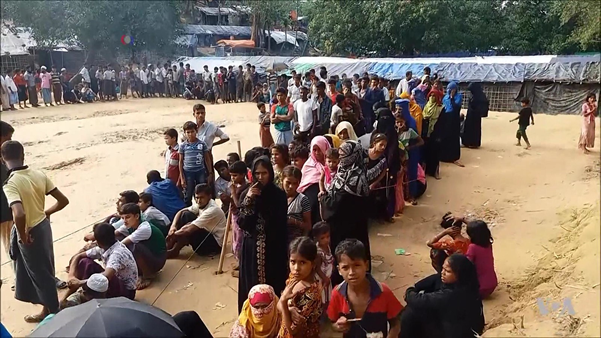
Genocide is back in the headlines. At the end of February this year, the Dutch parliament passed a nonbinding motion saying that ‘a genocide on the Uyghur minority is occurring in China…’ In 2019, lawyers representing The Gambia, an African state, brought a case to the International Court of Justice (ICJ) accusing Myanmar of committing genocide against an ethnic minority, the Rohingya. For reasons outlined in this blog, it is almost certain that the accusations against China, which is, unlike Myanmar, a global superpower and a voting member of the UN Security Council with power of veto, will only ever be rhetorical: we will not see Xi Jinping, or any other Chinese official, called before an international court. The Chinese Embassy in The Hague denounced the motion as a smear and an ‘outright lie.’ In January, 2021 British lawmakers, backed by British Holocaust survivors, debated adopting a ‘Genocide Amendment’ to a trade bill, designed to prevent deals being struck with countries allegedly perpetrating genocide. So far, the amendment has not become law. If the advocates of the amendment had China in mind, the majority opinion seemed resigned to accepting that trade outweighed moral outrage. As Dorit Oliver Wolff put it simply and directly: ‘It saddens me that we continually have genocides and do nothing. What is the point of commemorating the Holocaust. When nothing is actually done to stop it…’
The passions stirred up by these debates and accusations leave no doubt that this word ‘genocide’ carries a moral freight of immense power. But what is genocide, and who has the power to define its meaning? Above all, what purpose should the idea of genocide serve? Is it exclusively a legal term or is it a label to judge past atrocities, or both? If we define genocide as an episode of mass killing that targets a human group of some kind, then genocides seem to define the course of recent history. Atrocities perpetrated by state actors against stigmatised minorities took place in the Ottoman Empire, in Nazi occupied Europe, in Africa and Asia. Above all, the word bears all the crushing moral and emotive weight of the Holocaust – which for some historians is the definitive genocide.
Genocide is uniquely stigmatising and is sometimes called the ‘crime of crimes’. States will do everything they can to prevent the charge sticking: as we saw when Nobel laureate Aung San Suu Kyi personally defended Myanmar at the ICJ. Turkish president Erdogan persistently denies that a historical genocide took place during the First World War against the Armenians. Proposals to define the Atlantic Slave Trade or the wars fought against Native Americans as genocides are aggressively resisted. The word is often used, without definition, for political or apologetic purposes – to accuse others of a heinous crime or to claim special status.
In this blog, I’d like to give my perspective as to why the legal idea of genocide can be problematic – and suggest that there might be a strong case to provide international law with a sharper weapon in the struggle to prevent mass atrocities in the form of a treaty to prevent crimes against humanity. The tough question, in my view, is whether despite the undoubted power of the word, the concept of genocide is an effective means of prevention. If we insist ‘Never again’ – how is that to be enforced?
Genocide is a neologism – a coinage. At the beginning of the Second World War, neither the word nor the concept existed. Genocide was the coinage of Raphael Lemkin, a Polish Jewish lawyer who had been born in the so called ‘Bloodlands’ of Eastern Europe and witnessed the German invasion of Poland and the tragic consequences of Nazi occupation. Lemkin’s great insight was that German persecution targeted human groups – and so required a new term in international law. He proposed combining the Greek word genos meaning race or people with the Latin suffix -caedo – the act of killing. Hence genocide. The story of how Lemkin campaigned to have a new legal term adopted in international law by the new United Nations is well told in Philippe Sands’ book ‘East West Street’ – which I highly recommend.
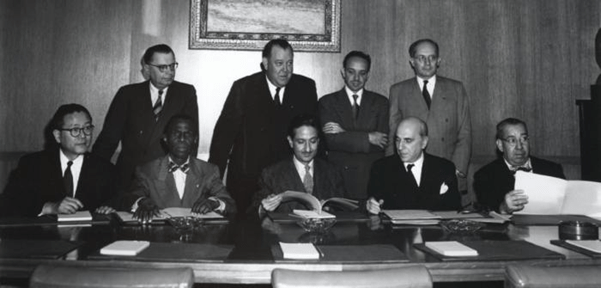
Lemkin’s hard fought campaign culminated in the adoption by the UN General Assembly of the ‘Convention on the Prevention and Punishment of the Crime of Genocide’ on 9 December 1948. It was an astonishing achievement. Genocide – which in legal terms had no significant meaning before the Second World War – was now an international crime. The drafters of the Convention denounced genocide for ‘inflicting great losses on humanity’ at ‘all periods of history’: it was an ‘odious scrouge’. The adoption of the Convention meant that committing acts of genocide could be punished – and perpetrators of such acts held to account. If one reads the Convention – which can be accessed on the UN web site, you will immediately notice that it is not a long document. In fact, some legal academics have described it as cryptic: the Genocide Convention is indeed enigmatic and puzzling.
At a closer look, it is noticeable that the Convention refers first not to punishment of genocide but prevention. Its purpose, then, is to prevent and punish. So how is the crime of genocide to be prevented? By what means? On this absolutely crucial point the treaty is somewhat opaque. I’d like to draw attention to Article Three. It may not be immediately clear that Article Three is in fact all about prevention. It refers to criminal acts such as incitement that are conceived in law as ‘inchoate crimes’. This legal concept is crucial here because inchoate crimes are not completed. For example, in law a group of individuals are guilty of the crime of conspiracy even if the conspirators fail to act out their plan. So, under the Convention certain acts can be punishable acts of genocide even if a genocide has not yet been committed in totality. I mentioned incitement: this, for example, might refer to propaganda that demonises a group and urges targeting members of the group. In other words, hate speech that clearly urges discriminatory action against the group. Propaganda stigmatising Jews and others was spewed out by Nazi media in the 1930s – but it was not yet a crime under international law to incite hatred and violence. In the period before the Rwandan genocide erupted between April and July 1994, Radio Télévision Libre des Mille Collines (RTLM) blared out a barrage of hate speech directed at Tutsis.
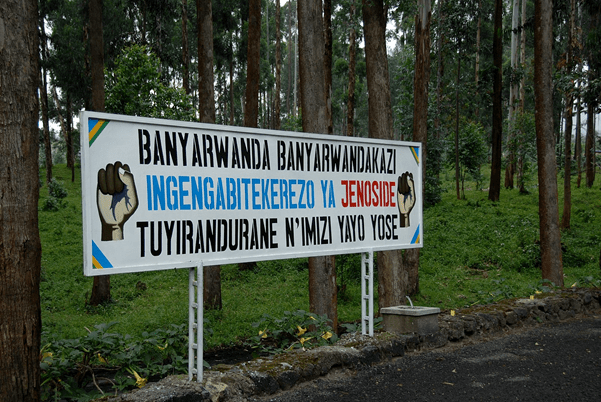
In 1994, the International Criminal Tribunal for Rwanda indicted and punished some of the individuals who had used RTLM to both stigmatise a group and incite violence . The problem, of course, is that the international community failed to use the legal tools of Article Three to try and prevent the genocide in the period before the violence erupted: the United States for example refused to act against RTLM on the grounds of protecting free speech.
That raises a fundamental problem. Under international law, states jealousy guard their autonomy – as China aggressively does today when criticised for its allegedly genocidal actions. As a thought experiment, imagine that in the 1930s, the British government had insisted that the German Propaganda Ministry cease its attacks on Jews? The diplomatic reply would almost certainly have been to “mind your own business”. In other words, the preventive potential of Article 3 will invariably come up against the formidable barrier of state sovereignty.
That’s not the only problem – not by any means. If genocide is to be prevented it must first be defined and identified. In law, no one can be accused of committing a crime if the act he or she has committed is not clearly understood as a crime. So how well does the Convention help us grasp what a genocide actually is? After all, how can something be prevented it is not defined? The short answer to the question is that drafters of the Convention left us with daunting problems and legal academics have worn out keyboards trying to resolve these difficulties. So, here I focus on the most important. Remember that prevention requires a good working definition of what we are trying to stop happening to truly grapple with this ‘odious scrouge’. If we have to quarrel about exactly what is happening in Xinjiang or Myanmar then perpetrators are given carte blanche to get on with the job. Some genocides have unfolded with horrifying speed. Arguably, one reason for the failure to act when communal violence engulfed Rwanda was a consequence of a squabble about whether or not genocide was being committed.
What makes the Convention so problematic and blunts its power to prevent? It is important to understand that the drafting of the Convention was a long drawn out process – and the wording of the Convention was bitterly contested among representatives of the Allied powers who had defeated Nazi Germany. You will remember that Lemkin’s definition of genocide was that the crime was perpetrated against groups: the final wording of the Convention states: ‘genocide means any of the following acts committed with intent to destroy, in whole or in part, a national, ethnical, racial or religious group, as such…’ Anything missing from that list? Yes, to be sure. The drafters of the Convention wanted to include political groups – and a concept of cultural genocide. These proposals were blocked by the Soviet Union and British and American delegates, who made sure that this powerful new word could not be used to characterise violence committed in colonial territories or against African Americans. These omissions had significant consequences. In 1965, the Indonesian army embarked on a campaign of mass murder that led to the deaths of between 500,000 and a million individuals who were or were alleged to be members of the Partai Komunis Indonesia, the PKI. A heinous crime, but was it a genocide? No, not under the Convention because members of a political party are not protected as a group. The mass killings in Indonesia took place unheeded in the West and are barely remembered today. Perpetrators have never been brought to account. As a thought experiment, suppose that the UN had possessed the legal means in 1965 to define the mass killings as a genocide? I suggest that the perpetrators and their crimes would have suffered some kind of retribution and their victims would be remembered and commemorated.

Allow me to pose some questions. What do we mean by the ‘Cambodian Genocide’? You may be surprised to learn that, in legal terms, the Cambodian genocide does not refer to the annihilation between 1975 and 1979 of more than 1.5 million Cambodians at the hands of the Khmer Rouge. This utopian folly was denounced by eminent politicians as ‘one of the clearest examples of genocide in recent history.’ Yet according to the UN backed Extraordinary Chambers in the Courts of Cambodia (ECCC) that tried Khmer Rouge leaders, the charge of genocide applied solely to the persecution of specific minorities, the Cham and ethnic Vietnamese. The millions of Cambodians who perished in the notorious ‘killing fields’ were not recognised as a group. Second question, was genocide committed during the Balkan Wars in the 1990s? Again, the answer is legally complicated. International criminal courts recognised that terrible violence had been committed against civilians by both Serbian and Croatian armed forces. But the court finally concluded that genocide could solely be applied to the mass killings of some 8,000 Bosnian Muslims in the Srebrenica enclave in July 1995. And even in this case, the legal conclusion was reached after convoluted arguments about whether the victims of the Srebrenica massacre were members of a group. It was finally decided that the leaders of the Serb militia who carried out this ghastly crime had indeed intended to destroy a human group under the terms of the Convention. Lemkin passionately believed that human groups were targeted by terrorist states such as the Third Reich and so required legal protection. But defining a group has proved notoriously difficult.
I’ll conclude by briefly discussing a possible solution to some of the issues I have raised here. In 2008, a group of experts and scholars led by Leila Nadya Sadat and the late M. Cherif Bassiouni founded the ‘Crimes Against Humanity Initiative’ to lobby for a new international treaty to prevent and punish crimes against humanity. The members of the initiative persuaded the UN International Law Commission to work on drafting such a treaty – which was finally published, as a draft, in 2019. Sadat and her colleagues concluded that the Genocide Convention failed to stigmatise terrible acts committed against civilians in numerous conflicts and crises. While the Genocide Convention provides in theory a legal framework to prosecute perpetrators of genocide, and the Geneva Conventions prohibit war crimes, crimes against humanity have yet to be codified in international law – in other words there is not a Convention or treaty prohibiting crimes against humanity under international law. Such crimes are, to be sure, referred to in the statutes of the International Criminal Court and various International Tribunals – but there is no consistent definition. Many states such as Iran and United State bellicosely resist the adoption of a new treaty – but we should reflect on the failures of the Genocide Convention to provide the means to prevent the ‘scourge’ of genocide as we have seen in Rwanda, Myanmar and perhaps Xinjiang – and reflect on a legal way out of the impasse that is offered, in my view, by the proposed new treaty: ‘Mindful that throughout history millions of children, women and men have been victims of crimes that deeply shock the conscience of humanity…Recognizing that crimes against humanity threaten the peace, security and well-being of the world…’
Further reading:
Barnett, M.N., Eyewitness to a Genocide: The United Nations and Rwanda, Ithaca: Cornell University Press, 2002
Bloxham, D., Genocide on Trial : War Crimes Trials and the Formation of Holocaust History and Memory, Oxford: Oxford University Press, 2001
Schabas, W., Genocide in International Law: the Crimes of Crimes, Cambridge, U.K., New York: Cambridge University Press, 2000
Useful web links:
https://www.un.org/en/genocideprevention/genocide-convention.shtml
https://legal.un.org/ilc/texts/instruments/english/draft_articles/7_7_2019.pdf
https://www.icc-cpi.int/resource-library/documents/rs-eng.pdf
https://www.icj-cij.org/en/case/178
https://www.icj-cij.org/en/case/91/judgments
 The British and Irish Association for Holocaust Studies