Dr. Daniela Ozacky-Stern
Dr. Daniela Ozacky-Stern is a Post-doctoral researcher in the Institute of Holocaust Research, at Bar-Ilan University, Israel. Additionally, she is a lecturer at The Holocaust Studies Program at The Western Galilee College, in Akko, Israel. She conducted her postdoctoral research at Yad Vashem, researching Jewish escapes to the forest during the
Holocaust, and was the director of Moreshet Holocaust Archive in Givat Haviva for over ten years. Dr. Ozacky-Stern earned her Ph.D. in Jewish History at The University of Haifa, Israel, studying the Jewish partisans in the forests of Lithuania and Belarus during The Second World War and the Holocaust. She recently published an article in The International Journal of Military History and Historiography about executions of Jewish partisans in the Lithuanian forests. She earned a master’s degree in General History from The School of History in Tel-Aviv University. This thesis was published as a book.
In 2019 Dr. Ozacky-Stern presented at the BAHS Conference, that took place in the University of Roehampton.
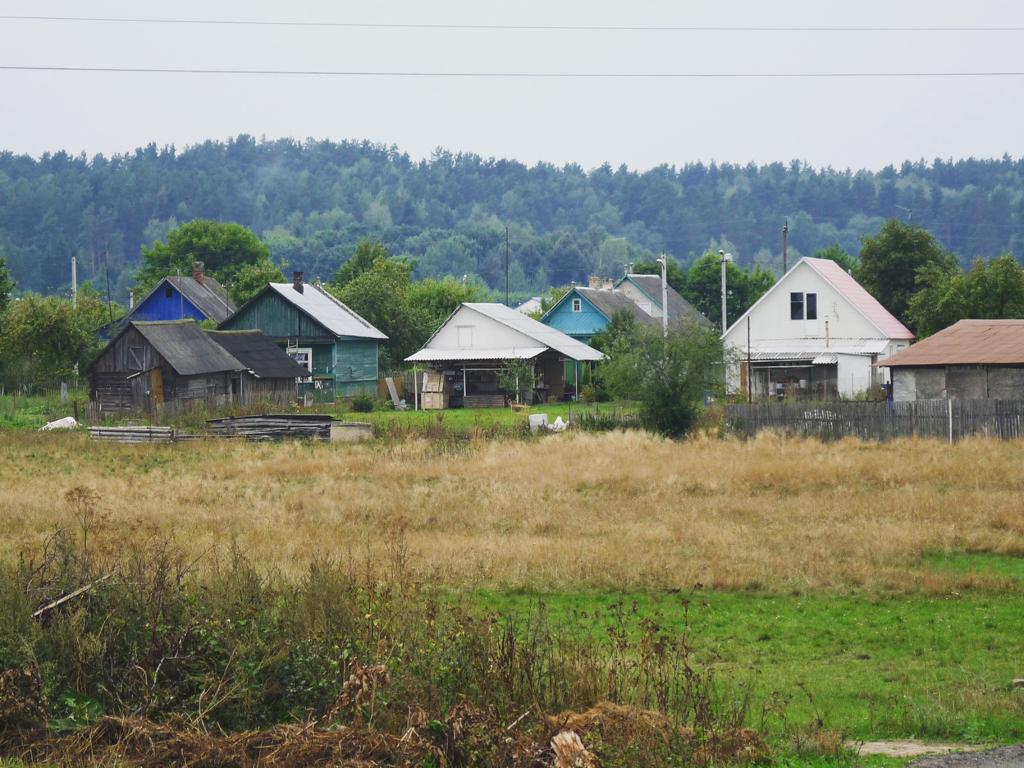
It was a warm, sunny day in Western Belarus as I was getting ready to continue my study tour to Radoszkowice, and other small towns in the area as part of my dissertation research. I had decided to physically visit the places I was writing about to get a feel for the area, to absorb the sights and to look for Jewish traces. Whilst previously collecting materials for my research at the Fortunoff Video Archive for Holocaust Testimonies at Yale University, I had previously encountered the video testimony of Baruch Shuv, who was a partisan in the forests near Vilna during the Second World War. I thought – it is interesting how sometimes, we as historians come across a single story that particularly touches us, and through this experience, we lead our research in its direction. This was my experience with the testimony of Shuv.
In the introduction to his autobiographic book, issued in Israel in 1995, he states: “This book was born after much consideration. I asked myself – who needs another book on the Holocaust? Who will read it?”. He then adds that for years, he tried to avoid discussing the Holocaust and wanted to keep the separation between “there” and “here”. Indeed, he wanted to be a “normal” person, just like anyone else. Yet, approximately seventy years later, his story will stand at the core of a new research on the Holocaust in Western Belarus.
Living and dying in Radoszkowice
Born in Vilna in 1924 to a family of merchants, Shuv grew up in a traditional Jewish atmosphere with three siblings. He studied at the “Heder” (religious school), and later in the “Tarbut” gymnasium, at which the studied language was Hebrew. Following the German occupation of Lithuania in June 1941 and the creation of the Jewish Vilna Ghetto in September, Shuv and his older sister Zipporah were sent by their parents to the small town of Radoszkowice, where they had acquaintances – the Starobin family. Yet, this town was also under Nazi occupation, and the Jewish population was confined to a curfew at night. Jews were enforced to wear a yellow star on their clothes, and the German authorities ordered that all Jewish property be handed over onto them. On 11 March 1942, the Germans conducted a deadly Aktion in Radoszkowice: they surrounded the town and captured around 900 Jews. They led them to the nearby village of Udranka, separated 110 young people who were qualified for work, and the others were shoved into a barn, shot to death, and eventually the barn was set alight. Zipporah Shuv was one of the victims murdered that day. During the roundup, and taking advantage of the chaos, Shuv had fled to the “Todt” garage where he worked; his co-workers there were Russian POWs. With the help of a friend, he was hidden in a pit. In the evening, his Russian colleague beckoned to him – “Come out, you’ve got to see this”. The garage was on a hill, and the town visible in the valley below. He saw a long line of people – he learned that they were the Jews, and not far away he saw a small house, which looked like a barn. People stood in line and one could hear gunshots the entire time. Shuv went back to hide, and when he came out again later, he saw the barn blazing. The whole area was full of flames and smoke: “I saw it as if I was watching some kind of a dream, a movie“, he recalled in later years. He waited for morning, then realized that some Jews had been kept alive in the town to work for the Germans and decided to join them. After the Aktion a small ghetto was formed, in which the survivors and forced labourers were incarcerated.
In the spring and summer of 1942, Soviet partisan units began to organize in the surrounding forests against the German occupiers. During time, of course, awareness of the possibility of escaping to the forests was far from the thoughts of most Jews. Fear of the unknown, the hardships of life on the road, and the notion of leaving a familiar place behind was too difficult to consider. However, there were some Jews who decided to escape: mostly young and with no remaining family in the town. Shuv, alongside other young Jews, deliberated on this option of escape. They understood that they must have money and weapons to offer, and to be accepted into the partisan units.

Facing a moral dilemma
Although they desperately wished to escape the ghetto, these youngsters faced a moral dilemma: the Germans warned the Ghetto inhabitants that even if a single Jew would escape – the entire ghetto will be liquidated. As a result, this horrible threat postponed Shuv’s and his friend’s decision to escape. The pressure was of enormous magnitude, and so they continued to live on a borrowed time in the ghetto. One day, by some miracle, Shuv received a letter from his mother who was in the Vilna Ghetto, asking about her two children and begging him to come back to Vilna. Shuv dared not tell her that Zipporah had been murdered, and he wrote back that she had escaped. With the help of a German soldier who transported a tanker between the two places and who had agreed to assist, his mother passed Shuv enough money to bribe the German guard in Radoszkowice. Shuv successfully managed to leave town and head back to Vilna to reunite with his mother. Not long after his departure, two young Jews who could not face being locked in the Ghetto anymore, escaped te Radoszkowice to the nearby forests, as had been their original plan. As a result, the Germans liquidated the entire Ghetto. In his video testimony, Shuv details his escape from Vilna to the Rudniki forests, where he joined the partisan units and survived until the end of the war. After the war, Shuv went back to Radoszkowice where met one of the Starobin family, who had also managed to escape and survive among the partisans. Starobin returned to Radoszkowice, where he married a local non-Jewish girl, and remained as the only Jew left in this town.
Moved by his story, I decided that during my visit to Belarus, I must visit Radoszkowice and look for Starobin, the ex-partisan.
Searching for the dead, 70 years later
Driving through the main street of Radoszkowice, I was determined to find the single Jewish family who remined in the town. Holding the transcript of Shuv’s testimony in my hand, I asked the guide to talk to the locals, and to enquire if they knew the Starobin family. We stopped two men riding their bikes and asked them, though they did not understand what we were talking about. We entered the town’s church and tried to ask there but had no luck. Finally, the guide said that we must continue with our journey, as it was getting late and we still had a long drive to our hotel in Minsk. Before we left, and in almost an almost spiritual way, I asked him to talk to one last person – an old lady who was sitting at the edge of the road selling apples. The guide asked her if she knew the Starobins, and she pointed her finger to the other side of the road, and said: “You see this little girl with the red shirt? She is a Starobin”. We crossed the road and walked towards an improvised table, behind which two little girls sat behind selling plums from big buckets. We asked the girl with the red shirt, and the big blue eyes – “Are you from the Starobin family?”.

She took us through a short muddy road to a nearby one room apartment, where the dining table and the bed were in the same space. Her parents and older brother were barbecuing outside. It turned out that her father was the son of the Starobin partisan, friend of Shuv, who had sadly died not too long ago. They invited us in, and the boy opened the cupboard with glass doors, and took out two framed photos of his grandfather and great uncle – the two Starobin brothers who had fought as Jewish partisans. I had found them.
As Holocaust researchers, we often come across testimonies which affect us in strange ways. The video testimony of Baruch Shuv was one such source, which haunted me and pushed me into the deep search of what happened to the Jews in Radoszkowice. With grief, I heard of his passing at the age of 96, survived by two sons who were pilots in the Israeli Airforce and eight grandchildren. Although Shuv is no longer with us, I keep reflecting on the power of a single testimony, and how it can shape our understanding of those horrible past events.

 The British and Irish Association for Holocaust Studies
One thought on “The Holocaust in Radoszkowice (Belarus) – In memory of Baruch Shuv (1924-2020)”
Comments are closed.