On March 6th 2020, the British Association of Holocaust Studies’ fourth Postgraduate Conference was held at the University of Exeter. Panellists at different stages of postgraduate study travelled from across the UK and Europe to present on a wide range of topics, broadly centred around the theme of “The Holocaust, Memory and Society”. The day started with a keynote lecture from Dr David Tollerton, Senior Lecturer in Jewish Studies and Contemporary Religion at the University of Exeter. David’s talk, entitled “Holocaust Memory and British Debates on Diversity, Inclusion, and Extremism”, presented material from his recently-published book, Holocaust Memory and Britain’s Religious-Secular Landscape: Politics, Sacrality, and Diversity. He spoke about the complex overlap between Holocaust commemoration and securitisation measures, including the origins, uses and implications of ‘British Values’, and argued that these things must be given critical attention.

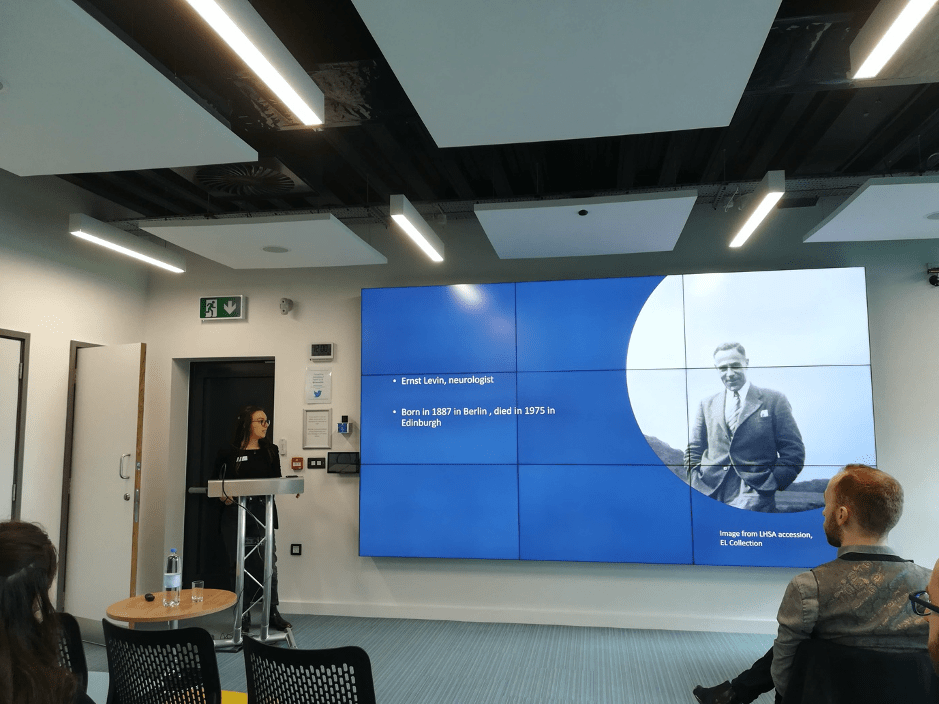
The first PhD panel, “Responses to and Memories of Persecution”, featured presentations from Barnabas Balint (University of Oxford), Sophie Bayer (University of Edinburgh), and Lauren Cantillon (King’s College London). Barnabas’ paper looked at the agency of Jewish youth during the Holocaust in France, including an insight into the impact of gender on the roles and responsibilities held. Sophie’s paper examined the Ernst Levin Collection, and the style of communications between Levin and his acquaintances about the atrocities of the Third Reich. Lauren’s paper assessed women’s personal narratives of sexual violence during the Holocaust, specifically the testimony of Edith Eger across multiple modes (audiovisual interviews and a memoir).
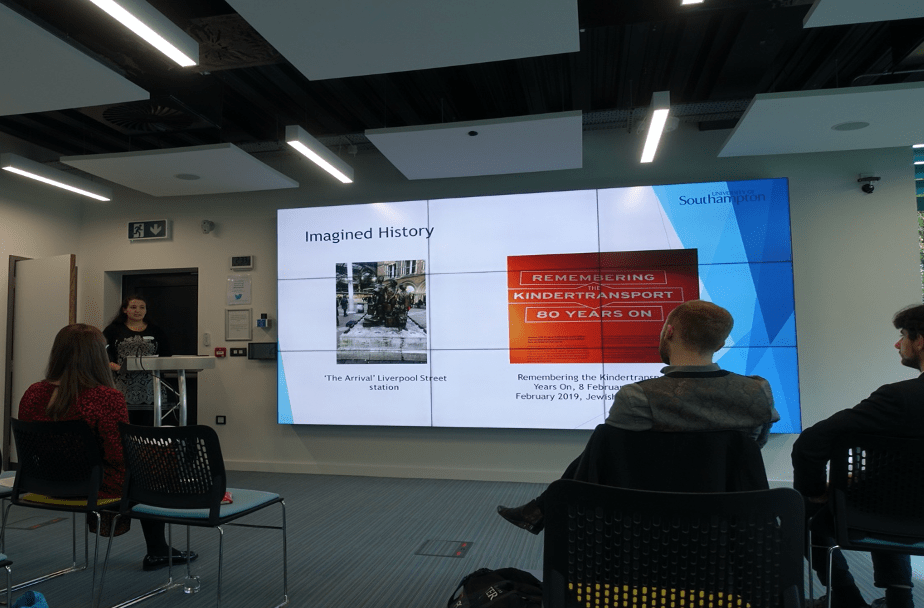
After a short break for lunch, the second panel took place, which incorporated papers on the representation of the Holocaust by Nicola Woodhead (University of Southampton), Emanuel-Marius Grec (University of Heidelberg), and Charlotte Mears (Kingston University). Nicola presented her research on the lives on “transmigrant” kinder of the Kindertransport and how the representation of the Kindertransport has influenced how they view themselves and present their life narratives. Emanuel-Marius’ paper engaged with the concept of “competitive memories” in Romania and the tension between the memory of communism and Romanian fascism in historiography. Charlotte’s work examined the representation of the Holocaust in private museums, specifically its utilisation for shock value as a means to attract paying customers.
Following the panels, a workshop was held, offering an opportunity for reflection on the research process of postgraduate work, with a particular focus on fieldwork. It was a valuable part of the conference in which all could share their experiences, offer advice, and ask questions in a supportive and mutually beneficial environment. According to one of the panellists, “it is helpful to discuss together things that have bothered us/affected us that perhaps those outside the field many not ‘get’.” The day concluded with informal drinks where the conversations continued, and connections were made.
We would like to thank BAHS for funding the conference and offering bursaries to some of our speakers, our keynote speaker, our presenters, our delegates, and the University of Exeter for making this event happen.
 The British and Irish Association for Holocaust Studies