
Daniel Adamson
Given his family connections to Dumfries and Galloway in Scotland, Daniel Adamson (PhD student at Durham University) was inspired to explore further the remarkable story of local figure Jane Haining. A Christian missionary who worked in Budapest, Haining risked her life to assist Hungarian Jews during the Holocaust, before herself perishing at Auschwitz-Birkenau in 1944.
In this short blog post, Daniel presents the little-known story of Jane Haining, assesses its historical significance, and offers some explanations for its relatively low profile in public consciousness.
Introduction
The narrative of the Holocaust is far from a straightforward characterisation of ‘perpetrators’ and ‘victims’. Increasingly, the complex nexus of human roles played within the genocide are attracting historical consideration: ‘bystanders’, ‘collaborators’, ‘rescuers’ and so forth.
However, within the limited existing public consciousness of contemporary resistance to the Holocaust, the actions of Jane Haining are even less well-known. Despite being only one of two Scots to be recognised as Righteous Among the Nations by Yad Vashem, it is only in recent months that Haining’s story has begun to attract the recognition it deserves. Nonetheless, the story of Jane Haining represents an important opportunity to broaden the nature of Britain’s engagement with the Holocaust, and to reconsider historical narratives that have suggested a degree of secondary separation between the United Kingdom and the tragic events that occurred in mainland Europe.
A life less ordinary
Jane Haining was born in 1897 in the small rural village of Dunscore in Dumfriesshire, South-West Scotland. From a young age, Haining was a committed member of the evangelical United Free Church of Scotland. A strong sense of Christian mission would go on to guide the remainder of her life. Prodigiously academic, Haining was one of few girls to attend the prestigious Dumfries Academy in the early 1900s, and displayed a particular talent for learning foreign languages.
After a decade of secretarial work, in 1932 Haining secured a position as matron of the girls’ hostel of the Jewish mission school in Budapest. The Jewish mission school had been established in the 1840s by the Church of Scotland with the intention of evangelising Hungarian Jews. Haining oversaw the wellbeing of some 400 pupils, and was tasked with preparing the Jewish children for formal religious conversion once the age of 18 had been reached.
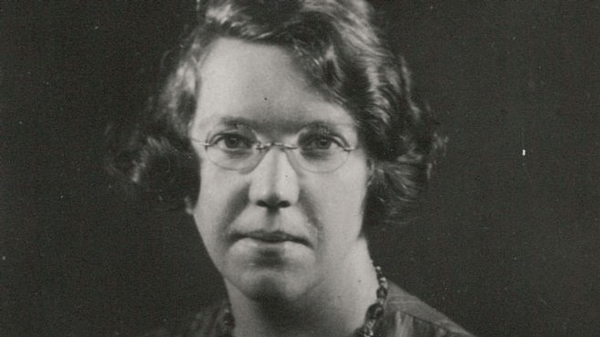
Following the outbreak of the Second World War in 1939, Haining displayed a tenacious determination to remain with her young wards, despite the advice of the Church of Scotland Missions Committee that she should return to Edinburgh. In this regard, the sincerity with which Haining bore her pastoral responsibilities was not dissimilar to the more-commonly cited concurrent actions of Janusz Korczak, the Polish educator and director of a Jewish orphanage in Warsaw.
Haining’s assistance of persecuted Jews began before the German invasion of Hungary. From 1940 onwards, Jewish refugees from Nazi-occupied states had started to arrive in Budapest, and some were taken in by Haining and the Jewish mission school. Haining worked tirelessly to provide shelter and sustenance for her Jewish wards. During this period, Haining also helped Hungarian Jewish women to secure jobs as domestic servants, which to an extent could protect them from adverse social treatment. Haining also lent her assistance to attempts to arrange emigration for Hungarian Jews wishing to flee the country.
The German military invasion of Hungary came in March 1944, and was accompanied by a range of legal and social restrictions on the liberties of Jews. In late April of 1944, Gestapo officers arrived at the Jewish mission school hostel with the intention of arresting Haining, ostensibly due to charges of possession of illicit radio receivers. During Gestapo questioning, the charges against Haining were broadened to include ‘working among Jews’, ‘dismissal of an Aryan housekeeper’ and ‘political activity’, amongst other allegations. The assistance Haining had offered Jews over a period of some years had not gone unnoticed by the new German occupiers of Budapest.
Following confession under duress, Haining was transferred to the Kistarcsa transit camp on the outskirts of Budapest. In May 1944, Haining was deported to the Auschwitz II camp, alongside several of her Jewish pupils from the Scottish mission school. Haining was, at first, selected for labour rather than instant extermination.
However, Haining is reported to have died in hospital in Auschwitz on 17 July 1944. Somewhat unusually, Haining’s death was formally recorded in an official death certificate, which in turn was delivered to government offices in Edinburgh via the German legation in Budapest and the Swiss government. As a British prisoner, detained on political charges of suspected ‘espionage against German’, the authorities at Auschwitz were obliged to distribute formal recorded documentation of Haining’s death.
The cause of death was given as cachexia – in other words starvation – following complications caused by intestinal catarrh. Such a demise provides an insight into the terrible living conditions faced by Haining and her fellow prisoners at Auschwitz.
Historical significance
Jane Haining carries historical weight on several levels in the wider history of the Holocaust. Centrally, Haining offers a direct connection between the United Kingdom and the continental framework of the Holocaust. Whilst Britain’s complex relationship with the Holocaust has commonly been interpreted in secondary political terms, or in relation to external immigration of Jews, Haining provides British representation in the first-hand experiences of the victims of the Holocaust. Haining is believed to be the only Scot to have died in a Nazi concentration camp.
The sheer scale of the Holocaust is undeniably daunting. Yet the tale of Haining’s compassion – as is the case with other examples of individual rescuers – allows the human histories of the Holocaust to be reclaimed. The Holocaust was a human tragedy that was predicated on human agency. As such, it is the actions of figures such as Haining that allow modern audiences to ‘individualise’ the wider historical scope of the genocide.
The empathy of Haining’s deeds ae reflected in the post-war reflections of one of her few-surviving wards:
“I realised that she had died for me, and for others. The body of Miss Haining is dead, but she is not alone, because her smile, voice and face are still in my heart.” (Auschwitz DK, 2013)
As a representative of the Church of Scotland, Haining adds a further point of consideration to examinations of the relationship between Christianity and the Holocaust. This relationship – characterised by resistance, collaboration and most points in between – is likely only to be complexified by the release of the Holocaust-era archives of Pope Pius XII, which is due in 2020.
Commemoration and remembrance
To this day, public sites of memorial to Haining remain modest. A small stone memorial overlooks the rolling hills of Dunscore village, whilst two small stained-glass windows were installed in Haining’s honour in 1948 in Queen’s Park Govanhill Parish Church in Glasgow.

The publication of a biography of Haining in 2019 – authored by Mary Miller – drawing upon fresh research has galvanised efforts to commemorate “one of Scotland’s heroines” (Miller, 2019, p.1). April 2019 saw the organisation of a commemorative march in Budapest to celebrate Haining’s life, and was led by Scottish Secretary David Mundell. Increasingly, Haining is infiltrating the public and political consciousness of the United Kingdom.
Remembrance of Jane Haining in Hungary itself illuminates an intriguing aspect of a broader retrospective engagement with the Holocaust that has widely been deemed problematic. In 2010, a stretch of river embankment in Budapest was named after Haining, and Haining provided the focus of a temporary exhibition of 2010 at the Budapest Holocaust Memorial Centre.
However, contemporary Hungarian involvement in the Holocaust was significant. An estimated 437,402 Hungarian Jews were deported between in just a few months of 1944, at a staggeringly rapid rate (Braham, 1998, p.45). Collaboration between the dictatorial regime of Hungarian leader Admiral Miklós Horthy and Nazi Germany ensured a devastatingly systematic legislative and violent suppression of Jews.
Some critics, therefore, might point towards the Hungarian government’s recognition of Haining as a form of unrepresentative commemoration of redemptive episodes of Holocaust history over the more incriminating events which entailed (numerically) greater human involvement. Even in January 2017, Hungarian Minister Gergely Gulyás courted controversy through a slightly abstruse address delivered on Holocaust Memorial Day, which asserted that “the Hungarian state bears the responsibility for not defending its citizens during the Holocaust, there is no collective guilt, but there is state responsibility” (IHRA, 27 January 2019). Plans for the House of Fates Holocaust museum in Budapest, first unveiled in 2014, continue to attract accusations of attempts to “downplay the wartime role of Hungarians in the persecution and deportation of Jews” (Reuters, 19 October 2018).
The ambivalence with which certain Hungarian figures addressed the Holocaust has long been an issue of resentment. In the June 1946 Church of Scotland publication Life and Work, it was commented upon with some regret that attempts to invoke the assistance Miklós Horthy had not materialised into tangible deeds. Hungarian Bishop László Ravasz claimed that Horthy had “learned of the [Haining] case with deep regret and assured me of his sympathy for the Church of Scotland and all her workers”: yet no remedial action occurred (Life and Work, June 1946).
Several hypothetical explanations might be offered in order to explicate the relative general ignorance of Haining’s significant actions. In contemporary post-war Britain, Jane Haining’s story was not unknown, per se. In 1949, the Scottish minister David McDougall published the booklet Jane Haining of Budapest.
However, lingering uncertainties surrounding the specificities of Haining’s wartime life and death are likely to have contributed to a lack of commemorative prominence. Notably, for many years, the Haining family’s tombstone in the Dumfriesshire town of Castle Douglas even recorded her place of death as ‘Germany’. It still remains unclear exactly how many Jews Haining may have assisted, though the total is likely to number hundreds. Perhaps for this reason, Haining has been afforded merely cursory reference in existing historical works.
Geography and scale may also have played their part. Unlike, for instance, the Kindertransport scheme – which had a directly tangible impact on the population of the United Kingdom – Haining’s actions took place in a relatively distant corner of Eastern Europe. Likewise, whilst the Kindertransport rescue effort assisted nearly 10,000 Jewish children, Haining’s efforts operated on a smaller human scale.
Bluntly, Haining’s death – and the demise of many of her Jewish wards – may also have obstructed wider consciousness of her story. Rescuers who survived the war, such as Sir Nicholas Winton, had the opportunity to either articulate their experiences, or to receive lifetime honours for their work. Haining was simply not afforded this opportunity, and few of the Jews she assisted lived to share accounts of her actions.
Unavoidably, the Holocaust has over time become a currency of cultural capital. Accordingly, more cynical commentators may also point towards the ‘marketability’ of Haining’s story as an explanation for the absence of its representation in mass media. As a somewhat dour Scottish Christian, Haining does not perhaps possess the same cinematographic appeal of other resistance figures such as Sophie Scholl or Oskar Schindler. Nevertheless, this only adds to the remarkability of Haining’s story. Haining was an ordinary woman who carried out eminently extraordinary deeds.
Conclusion
As public awareness of Jane Haining continues to grow, it can only be hoped that her story can garner the recognition it deserves. Neglected for many years within historical narratives of the Holocaust, Jane Haining nevertheless provides an example of remarkable bravery within the maelstrom of war-torn Europe. Although relatively small in scale, Haining’s actions provide an opportunity for reconsideration of characterisations of relationships between both Britain and the Christian Church and the Holocaust. Jane Haining supplies an enduring reminder of the human empathy and bravery that existed within the devastating overarching scale of the Holocaust: and for this, she deserves to be remembered.
References
McDougall, David (1949). Jane Haining of Budapest. Glasgow: Church of Scotland Jewish Mission Committee
Braham, Randolph L. (1998) [1994]. “Hungarian Jews”. In Gutman, Yisrael; Berenbaum, Michael (eds.). Anatomy of the Auschwitz Death Camp
“News of Jane Haining”. Life and Work. Edinburgh: The Church of Scotland. June 1946
Miller, M., Jane Haining: A Life of Love and Courage (2019)
Auschwitz DK, Jane Haining, accessed through http://www.auschwitz.dk/Haining.htm
Imperial War Museum, Jane Haining Cairn, accessed through https://www.iwm.org.uk/memorials/item/memorial/72135
International Holocaust Remembrance Alliance (IHRA), Minister speaks at Holocaust Memorial Day in Budapest (27 January 2019) accessed through https://www.holocaustremembrance.com/index.php/ihmd-events/minister-speaks-holocaust-memorial-day-budapest
Reuters, Hungary’s new Holocaust museum divides Jews, faces ‘whitewash’ accusations (19 October 2019), accessed through https://www.reuters.com/article/us-hungary-holocaust-museum/hungarys-new-holocaust-museum-divides-jews-faces-whitewash-accusations-idUSKCN1MT1QQ
 The British and Irish Association for Holocaust Studies
27 thoughts on “Jane Haining: the Scottish protector of Jews who perished at Auschwitz”