
CHRISTIN ZÜHLKE
Christin Zühlke is a PhD Student at the Center for Research on Antisemitism at the Technical University Berlin, Germany. She holds an B.A. in Philosophy and German Literature and Linguistics and a M.A. in Jewish Studies and Philosophy. Her PhD project focuses on the Yiddish writings of the Sonderkommando in Auschwitz-Birkenau. She became an ELES Research Fellow in April 2019. Christin has worked in the areas of political and historical education since 2007; she was an intern at the German Desk of the International School for Holocaust Studies in Yad Vashem and the educational department of the Jewish Museum Berlin. In 2014 she was also in charge of the Death March Memorial in the Below Forest.
Right on the edge of the woods, between the two county borders of Brandenburg and Mecklenburg-Vorpommern in Northern Germany, lies a small but unique memorial: The Death March Memorial in Below Forest (Gedenkstätte Todesmarsch im Belower Wald). It is the only museum and memorial which deals specifically with the end of the Second World War and the death marches in Germany.
Nowadays, the green fields and the forest itself appear almost too idyllic in contrast to the history of which the trees are a witness. Between 23 and 29 April 1945, more than 16,000 male prisoners were gathered in this area of the woods, without accommodation or food, guarded by SS men. The prisoners tried to build shelters or dig holes in the earth and ate herbs, roots and tree bark. The missing bark can still be seen today, as well as markings from attempts at making provisional shelters and personal engravings, such as numbers or drawings.

“Fortunately for us, that year there were dandelions, which we were familiar with, as well as nettles…we ate leaves, roots…Some prisoners scraped the bark off trees to make a kind of flour. Others had little self-made graters. We ate the leaves off the bushes. We cut sticks off the bushes to build shelters, with some branches and our blankets draped over them, so that we could take cover underneath.”
Marcel Suillerot, born 1923 in Dijon, French prisoner, 20091
The Below Forest was only a short stop for the approximately 30,000 men, women and children during their evacuation from the Sachsenhausen concentration camp in Oranienburg. They left the camp on 21 April 1945, travelling in a north-westerly direction. Inadequately dressed, underfed and already weakened from their time in the camp(s), they had to walk up to 40km per day, sometimes through the villages on the route, watched by the inhabitants, crossing lines of refugees and sleeping outside. More than 1,000 people died on the way due to starvation or being shot by SS men; only a few managed to escape.
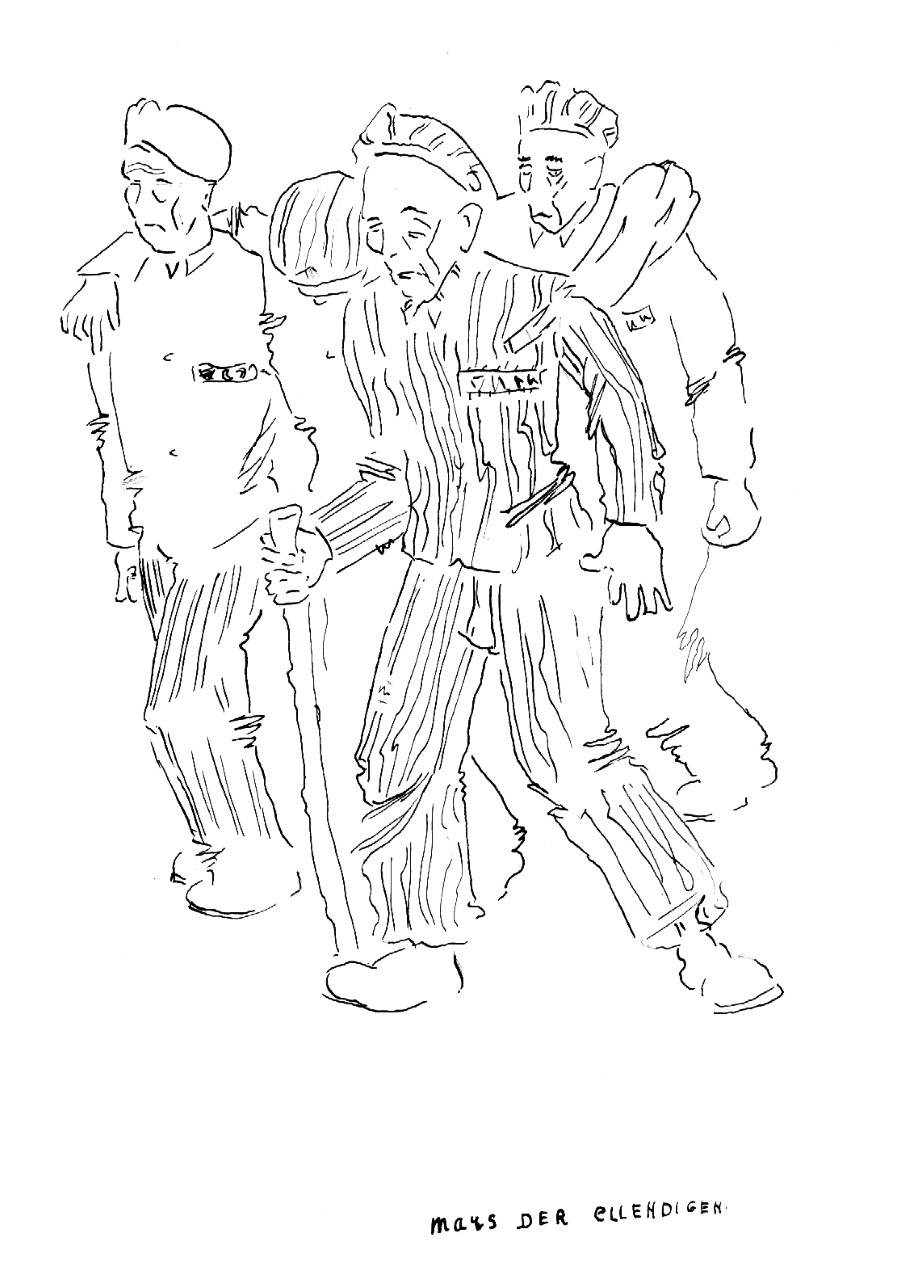
“The weather is dismal and drizzly. The pangs of hunger are getting worse, my wet clothes, hanging from my body, feel like lead, my feet in my clogs are raw from walking, and hurt more and more…”
Aloyse Ehleringer, born 1919, prisoner from Luxembourg, 19652
The International Red Cross was allowed to hand out food packages to weak prisoners at the Below Forest and to build an emergency hospital in the next village after negotiating with the SS. The majority of the prisoners were liberated between 3 and 6 May 1945, in the areas of Parchim, Ludwigslust and Schwerin, about 200km away from the concentration camp Sachsenhausen. These death marches from Sachsenhausen and the time at the Below Forest are some of the most impactful memories for survivors of this imprisonment.
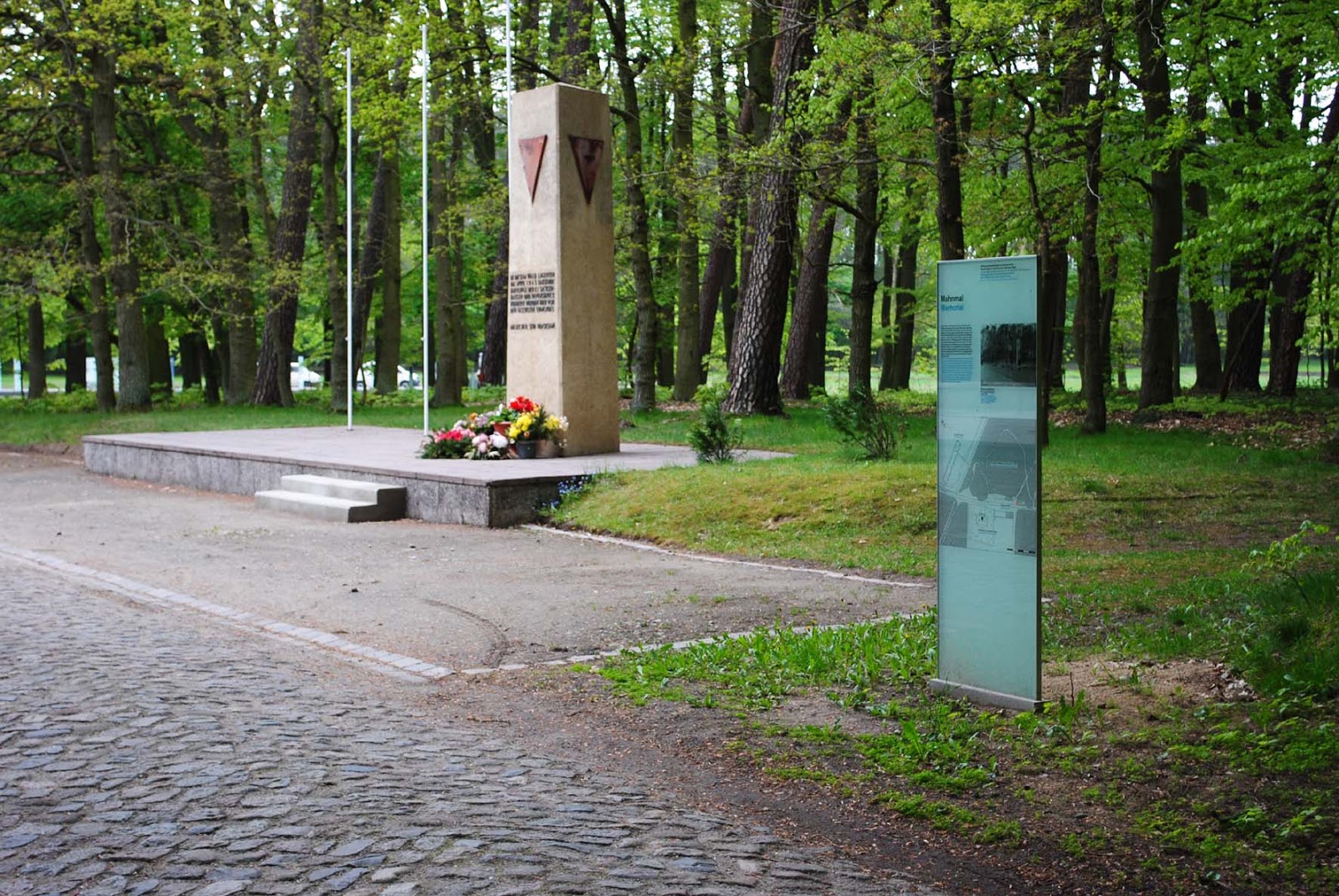
Not only this important fragment of history, which took part in this little forest, can be shown today during guided tours, events and educational projects,3 but also excerpts of the narrative when this part of Germany was Soviet-ruled and before Germany was united. The first commemorative stone was erected only in 1965, but memorial services took place there before. The trees which show different types of prisoners’ engravings have been marked with a red triangle. A memorial was installed 10 years after the original, which can still be seen today. It is built as a stele with a triangle base area and a large red triangle, a bigger version of the red triangles next to the trees. On the stele is written: “In this forest camped thousands of prisoners of the concentration camps Sachsenhausen and Ravensbrück in April 1945. Hundreds were murdered here by Fascists. Humans be vigilant!”4
120 enamel panels were built in 1976 to mark the route of the main death marches. The museum was opened in 1981; it belongs to the Brandenburg Memorials Foundation. A report of forestry science in 1982 stated that there are traces of prisoner activity on more than 100 trees. About 4,000 objects (mainly personal belongings such as glasses, watches, cutlery, but also cans from the Red Cross´ food packages) were found in the original camp area at the beginning of the 1990s. The historical area in the woods includes about 200,000m²: about 70,000m² are accessible and maintained.
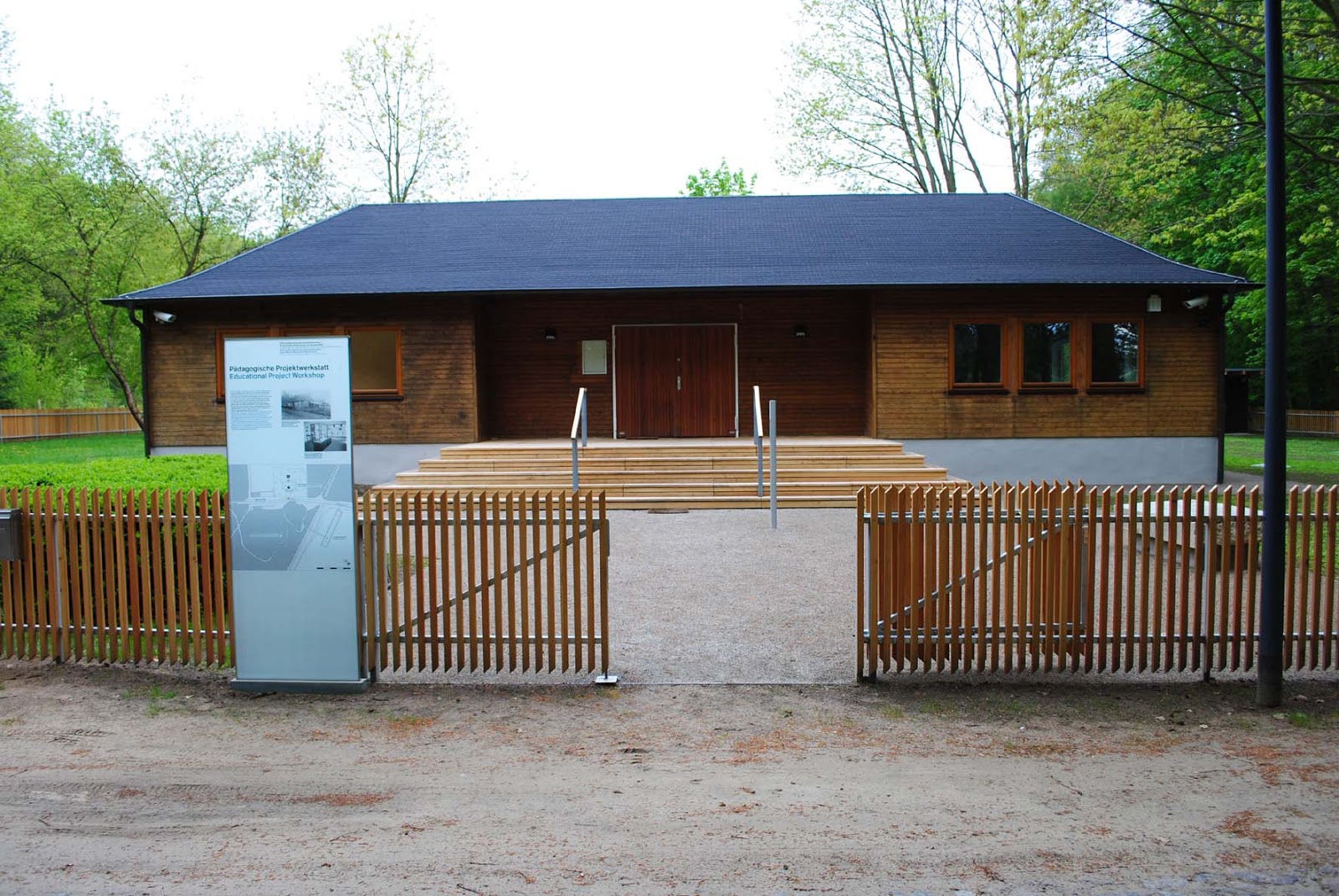
There are still a lot of remaining questions regarding the death marches. Last year, the Memorial’s team managed to answer one after intensive research. Pierre Combes, born 6 November 1925 in Albi, France, was in the concentration camps at Compiégne, France, and Neuengamme, Germany. He survived the death march from Sachsenhausen, but due to his poor health he was brought to a temporary military hospital run by the Soviet army in Grabow, a small village close to the Below Forest. According to fellow survivors, he was released from the hospital in the middle of May 1945, but presumably he had to return and passed away there. 132 victims of the death marches were buried at the cemetery in Grabow but original documents with a list of those who had perished were never found. In 1945, simple wooden crosses with Cyrillic inscriptions of the deceased’s names were erected. Unfortunately, there are also no photographs of these crosses, but a transcript by a Dutch man who retranslated the names survived. Due to this double translation, first into Cyrillic letters and second into Latin, some mistakes were made with the spelling of names. Pierre Combes was retranslated as “Kombess, Pere (Frenchman)”.5 His relatives were delighted to finally know where he was buried, thanks to the successful research of the Memorial team, and visited his grave in April 2018. Furthermore, the open air exhibition of the Memorial was translated into French in co-operation with his granddaughter Emmanuelle Cassan and French exchange students of the Eldenburg-Gymnasiums in Lübz, Mecklenburg-Vorpommern. This translation is now available for French-speaking visitors of the Memorial.
Socio-political issues are part of the history of this place, too. Part of the museum was destroyed by neo-Nazis and the memorial was besmeared with antisemitic slogans during an arson attack in September 2002. There have been problems with right-wing extremists in the area of the museum (primarily southern Mecklenburg-Vorpommern and northern Brandenburg) for many years. But the attack also led to different expressions of solidarity from civil society, such as the establishment of a support association and a travelling exhibition about the historical places and arson attack.
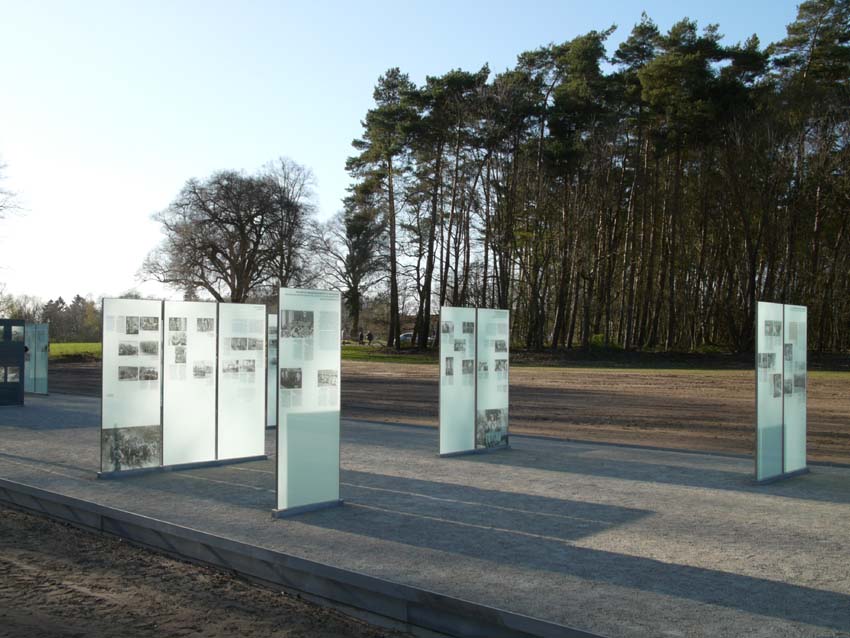
The renovated museum was reopened in April 2010; it still focuses on the historical forest area. A new open air exhibition was set up on the border to the former camp inside the forest, which can be visited even outside the opening hours of the museum. The glass stelae provide information about the evacuation, the death marches, the camp in the woods and the liberation, but also display photos, documents, drawings and testimonies. Their modern and minimalistic design stands out in the natural surroundings. At the very end of the exhibition stands a vitrine with findings such as cutlery, graters (which were used to shred the tree bark for eating) and personal belongings, placed to connect the descriptive area (the exhibition) with the historical one (the forest). Both areas bear witness not only to the individual stories of the prisoners but also to this moment at the end of World War II and the Holocaust.
Contact and Information
Death March Memorial in Below Forest
Head of Memorial: Carmen Lange
Belower Damm 1
16909 Wittstock, Germany
Phone: +49 (0)39925-2478
Fax: +49 (0)39925-77835
below@gedenkstaette-sachsenhausen.de
https://www.below-sbg.de/en/
1 Interview with Marcel Suillerot conducted by Carmen Lange, head of the Memorial, on April 18, 2009, private archive.↩
2 Quote taken from the memorial´s exhibition board “Faced with Death: Drawings of the Death March”.↩
3 About 3,500 people visit the memorial every year.↩
4 When the stele was erected, researchers thought that prisoners from the Ravensbrück concentration camp were gathered here. Historians proved later, however, that the conveys coming from Ravensbrück were gathered nearby but not in the Below Forest.↩
5 International Tracing Service, Bad Arolsen, special stock ‘Death Marches’, ‘Tote 45 – 1’, p. 90a.↩
 The British and Irish Association for Holocaust Studies