ROSEANNA RAMSDEN
Roseanna Ramsden is a second year doctoral candidate in the department of Arts, Design and Social Sciences at Northumbria University. In 2017 she was awarded a studentship to conduct further research into women’s experiences and representations of the Holocaust, following the work she carried out during her MA at the University of Leeds. The working title of Roseanna’s research project is ‘Women’s Holocaust Testimony: Gender, Reception, and Canon-formation.’ She is interested in women’s memoir and narration, gendered recall and gendered experience, and queer histories of the Holocaust.
Since the early 1980s, women’s first-person narrative accounts of the Holocaust have been integral to an ever-increasing academic sensitivity towards gender-specific suffering and issues of gender more widely in relation to the Holocaust. Certainly, in the last four decades, studies of women during the Holocaust have developed. They have, as Esther Hertzog points out, become ‘not just studies of “women and children,”’ but ‘studies of women’s society, female behavior, gendered socialization and other facets of women’s lives.’1Scholars of women and the Holocaust have, however, often characterised women’s Holocaust – and particularly concentration camp – experiences, as being particularly centred upon habits and behaviours considered to be typically feminine. That is, many return time and again to concentrating upon certain coping strategies documented by women in their memoirs such as, as Myrna Goldenberg explains, ‘friendships, bonding, nurturance, and other permutations of caring,’ as well as ‘other routine skills.’2
But is it true that such behaviours were central to women’s concentration camp experiences? And likewise, are such coping strategies so often given focus in women’s memoirs? Some critics argue that, in actual fact, women’s testimonies document a range of complex and diverse reactions to, and experiences of, the Holocaust, but that often these are obscured and overlooked. In historian Zoë Waxman’s words, ‘studies of women in the Holocaust favour stories that are seen as suitable or palatable for their readers, often avoiding those that do not accord with expected women’s behaviour or pre-existing narratives of survival.’3
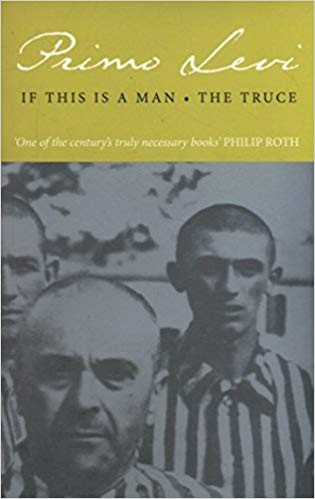
Furthermore, the reductive readings that Waxman, among others, criticises, have led to the commonly held scholarly view that while women’s experiences were often organised upon mutual assistance and caring, men’s were centred upon their struggles in isolation. Or, in other words, and as Primo Levi writes, men’s concentration camp experiences were characterised by ‘the struggle of each one against all,’ the ‘continuous war of everyone against everyone.’4 As such, what emerges are two opposing narratives. That is, in literary and historical studies of life in Nazi concentration camps, caring and the formation of surrogate camp families, or a social and community-centred experience, has become the domain of women, while conversely, hostility and the prioritisation of one’s own survival, or a solitary experience, has become the territory of men.
While it is, of course, true that many male survivors include in their narratives details about men’s struggles in isolation, and many women survivors, on the other hand, do explain that ‘survival was a matter of interdependence,’ I believe that it would be inaccurate to presume that either experience was fundamentally masculine or feminine, or that the behaviours of men and women were wholly converse.5Certainly, while men and women may award different meanings to certain experiences, or write about or recall them differently in their memoirs, a thorough evaluation of such texts reveals that the narrative of caring and the narrative of struggle were not, and cannot, be separated on the basis of gender. Exploring women’s Holocaust memoirs from a perspective far removed from the study of women and the Holocaust that is, as Ingrid Lewis explains it, ‘organised upon preconceived conceptions of gender roles and rigid canons of “rightful behaviour,’” evidences this.6
A re-examination of the representation of surrogate families formed by women – idealised, often decades later, by publishers, editors and scholars alike as the beauty of female interdependence and co-operation – proves illuminating. Though women’s memoirs reveal that often such close-knit communities or mutual assistance groups were exclusive and somewhat belligerent in nature, this element of women’s experiences and memoirs is rarely focused upon by scholars. Indeed, despite the fact that many women attest to the fact that surrogate families sometimes functioned to afford the protection of those within at the expense of those without, literary critics and historians remain reluctant to acknowledge this fact.
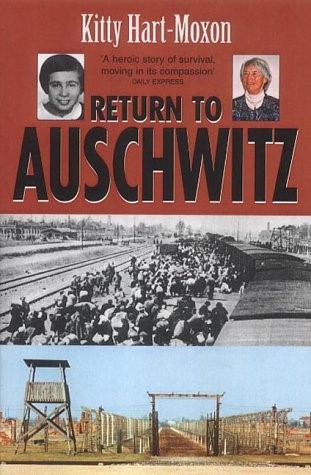
Kitty Hart-Moxon, for example, illustrates the hostility of women’s group units when she recalls that ‘as a counter to self-seeking treachery little ‘families’ formed within a block […] Members of a group helped each other out and defied the rest. Outside the family there had to be bribery; within there was love and mutual assistance.’7 She also feels it important to note that, in the women’s camp of Auschwitz, ‘nobody was to be trusted: anyone could be a thief, a murderer, a traitor or a spy […] Anybody might attack you and beat you up […] You had to be on the lookout the whole time.’8 Recollections such as this, however, remain largely ignored.
I suggest that the true diversity of women’s complex representations of, and responses to, the Holocaust will continue to be overlooked or obscured as long as focus is given to experiences that conform to expectations of gendered behaviour. Or in Waxman’s words, ‘this will continue as long as women’s testimonies are projected as ‘epics of love and courage.’9 Furthermore, a re-evaluation of women’s representations of surrogate families illuminates that they were often simultaneously inclusive and exclusive, and should function, contemporarily, as an integral part of both the narrative of nurturing and the narrative of struggle, the latter of which is often, and more widely, associated with male prisoners in discourses on the Holocaust.
Above all, I believe that the true variations and similitudes between the experiences of those persecuted by the Nazi regime, the facets that unite the experiences of men and women as those of Jews or victims, and most significantly, the complexity and intricacy of those experiences, will continue to be disregarded as long as focus is predominantly given to survivor narratives that conform to expectations of gendered conduct. They will continue to be overlooked as long as scholars, as Lisa Pine argues, continue to ‘read women’s testimony selectively, identifying what they consider to be “female” experience,’ therefore overlooking those that resist classification as such.10 That is, until all of the elements of men’s and women’s testimonies – both those that are palatable and those that are upsetting – are fully acknowledged, the true depth and diversity of responses to the Holocaust will remain in the margins of Holocaust history.
1 Esther Hertzog, ed., Life, Death and Sacrifice: Women and Family in the Holocaust (Gefen: Jerusalem, 2008), 22.↩
2 Myrna Goldenberg, “Lessons Learned from Gentle Heroism: Women’s Holocaust Narrative,” The Annals of the American Academy of Political and Social Science 548: The Holocaust: Remembering for the Future (1996): 87-8.↩
3 Zoë Waxman, “Unheard Testimony, Untold Stories: The Representation of Women’s Holocaust Experiences,” Women’s History Review 12:4 (2007): 662-3.↩
4 Primo Levi, If This is a Man and The Truce, trans. Stuart Woolf (London: Abacus, 1987), 48; Primo Levi, The Drowned and the Saved, trans. Raymond Rosenthal (London: Abacus, 1989), 108.↩
5 Edith Eger with Esmé Schwall Weigand, The Choice (London: Rider, 2017), 141.↩
6 Ingrid Lewis, Women in European Holocaust Films: Perpetrators, Victims and Resisters (Basingstoke: Palgrave Macmillan, 2017), 10.↩
7 Kitty Hart-Moxon, Return to Auschwitz (Thirsk: House of Stratus, 2000), 79 – 80.↩
8 Ibid, 77-8.↩
9 Waxman, “Unheard Testimony,” 674.↩
10 Lisa Pine, “Gender and the Family,” in The Historiography of the Holocaust, ed. Dan Stone (London: Palgrave Macmillan, 2004), 372. ↩
 The British and Irish Association for Holocaust Studies