
MARTINA MASI
Martina is a student in Berlin, currently reading History and Jewish Studies. She was born in Rome where she studied at the Artistic High School. Her goal is to work in the field of Holocaust memorials, in historical research and, above all, to spread her knowledge, born from an interest that has increased over more than ten years.
I would like to begin by sharing an experience that I would recommend to all those who, like me, have a great passion for history and, above all, an interest in the period related to National Socialism and the Holocaust.
I come from Italy and have always been fascinated by history. In 2016, through the voluntary association Lunaria, I had the possibility to spend two weeks as a volunteer in a former concentration camp. It was a unique opportunity, especially as the association covered most of the expenses, but primarily because it was my chance to work in the field. At the beginning I was hesitant; I did not know if I would actually want to participate in this kind of experience: two weeks alone, outside my country and in a hostel with other young people. I had no idea that this would turn out to be one of the most beautiful experiences of my life.
I had just returned from school that day and decided to register: Sachsenhausen was my choice. I had already visited the former camp, near Berlin, a city that I love and in which I now live and study. I was excited about the idea and I had prepared the necessary documents; they then gave me an affirmative answer and further information. Then I left in July, accompanied by my father and sister. They had chosen to come together so that they could accompany me to the memorial and greet everyone with me. I was a little nervous; I had never spent time alone, with the exception of an exchange in Germany the previous year. As soon as I arrived, I was welcomed by the group leader: a boy two years older than me, who was also a German and History student at the university in Berlin. Some of the other volunteers, who I would be working alongside for the two weeks, were already there. It was an international volunteering programme, so knowledge of the English language was a must and knowledge of German was advantageous. In fact, most of the activities were conducted in German with simultaneous translation into English.
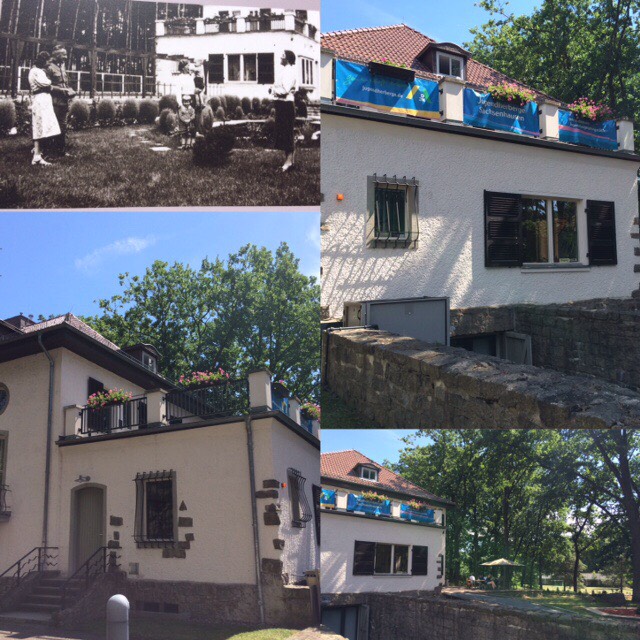
Once I arrived, I began to get to know the others. We walked around some of the site together; the hostel in which we were staying was the former villa of the camp commander, Theodor Eicke, so we were sleeping in the same rooms in which he and his family had lived. All these aspects certainly made life more interesting there. There were pictures of him and his family, and the experience of staying in that place made me feel even more in touch with the story. As the hours passed, the rest of the volunteers arrived. We were a group of young people from all over the world: Italy, Armenia, Russia, Spain, Turkey etc…We arranged for each of us to cook something typical of our country’s cuisine every day, and in the evening had dinner altogether. Sharing and talking with one another in this way, we felt at home.
The days passed like this: every morning we participated in either study or maintenance, sometimes both. Our studies consisted of going to the former concentration camp; taking guided tours; interacting with documents; reading biographies and discussing them; trying to retrace the lives of people, victims and perpetrators. We also often went to Berlin, especially on weekends, and had some opportunities to choose different destinations, such as Potsdam or Dresden. In Berlin, we walked through the city and visited the most significant places connected to the Second World War, including the Topography of Terror and the memorials to the Holocaust and the ‘T4’ programme. We were shown around by a German guide, with our group leader translating into English. We also did something similar in Oranienburg, a small village in Sachsenhausen. The village is very small, but pretty: there are woods and many historical places along the river, for example, the houses in which residents lived before the SS took them over and, later, the Soviets, following the occupation of the camp from 1945 to 1950. These houses were not wholly dilapidated but, after looking around inside, we actually found pieces of newspaper from the time and other objects.

One day we also went to Ravensbrück, known as the women’s concentration camp. Here we had a guided tour in English in and around the museum: it was a particularly dark day and this made the atmosphere even more gloomy. We noticed many differences with Sachsenhausen, which by comparison seemed a more active memorial.
Conducting Maintenance
Maintenance was not quite as interesting as studying! We had to try to take care of Eicke’s villa or carry out other tasks around the memorial. This generally consisted of cutting the grass around the memorial, cleaning everything up and fixing any damages. Often we did not have enough tools for everyone, or it was very hot and not particularly pleasant, but being together and listening to music helped to pass the time more quickly. Sometimes, we also had the task of helping the guides transport the leaflets to and from warehouses; they were arranged in packages which were quite heavy and we often spent hours doing this work. Despite the effort, however, we could also make this into a form of entertainment amongst ourselves. The days were spent between one adventure and another. During my time there, another group arrived at the hostel, so also shared that experience.
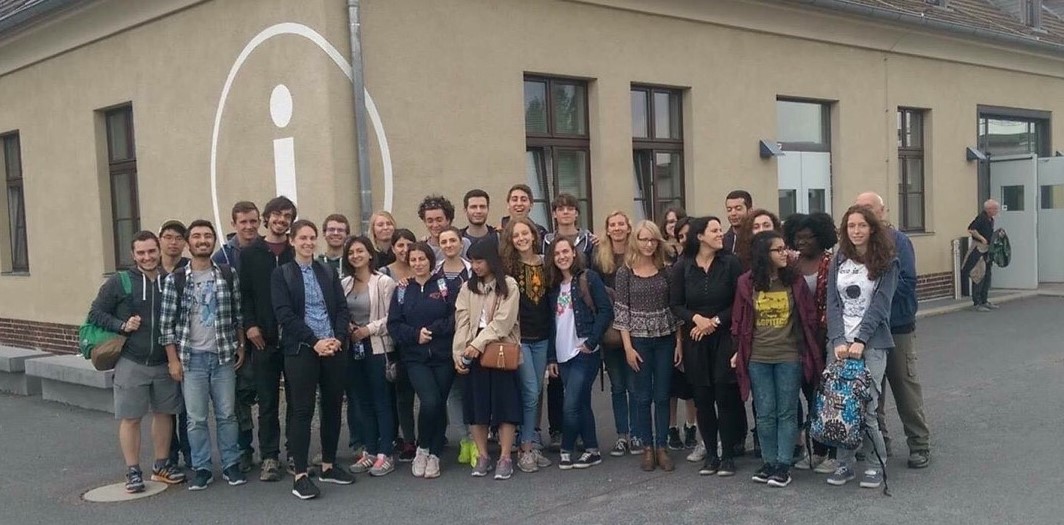
The most interesting part of my volunteering was when we met Reinhard Wolff, a survivor of the Soviet occupation and management of Sachsenhausen. This conference took place on the last day. Wolff was arrested by the Soviets, who were interning nearby Germans or those that had special or intimate relationships with the Nazis. Initially released, he was arrested once more and then deported following a second interrogation. The conference was particularly interesting because it offered the possibility for all of us to consider the reality of life in Germany after the fall of National Socialism and what conditions were really like. Had it really been a liberation? Or had it been a new occupation? The fact is that Wolff’s story has allowed me to understand the reality of those times and of the new terror, which led to Germany (Berlin in particular in Berlin) building a physical wall and, in Eastern Europe, to a new dictatorship.
Overall, this experience left me with a lot of memories. I look back on this experience fondly, especially the human side – the friendships that were created among the volunteers – as well as the historical side that I loved more and more every day. I was given an exceptional chance, and it would be nice if others could have a similar experience – particularly those who would like to commit themselves to the preservation of Holocaust memory. Of course, this type of activity is also carried out in other fields and contexts, but I am sure that in any case, such experiences can provide something that remains in us forever.

 The British and Irish Association for Holocaust Studies